
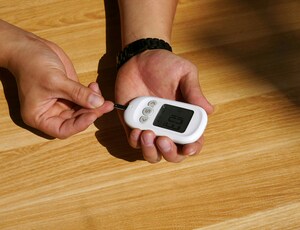
 Even with the growing popularity of continuous glucose monitors (CGMs), the best blood glucose (sugar) meters (BGMs) remain essential for many people with diabetes. They offer fast, accurate readings using a small blood sample, often at a lower cost than CGMs. Whether you’re looking for high-precision, low-cost test strips, Bluetooth connectivity, or dual glucose and ketone testing, this updated 2025 guide will help you choose the best blood glucose meter for your needs.
Why Blood Glucose Meters Still Matter
Despite advancements in CGM technology, traditional glucose meters are still widely used for:
- Backup testing when CGMs fail or are unavailable
- Spot checks for accuracy confirmation
- Ketone monitoring for those at risk of diabetic ketoacidosis (DKA)
- Budget-friendly glucose tracking
All meters sold in the U.S. must meet FDA standards and are evaluated using the ISO 15197:2013 accuracy criteria, which require 95% of results to fall within ±15% of lab values.
Top Blood Glucose Meters Comparison Table
| Brand/Model | Accuracy | Blood Sample (µL) | Test Time (sec) | Connectivity | Ketone Testing | Special Features |
|---|---|---|---|---|---|---|
| Contour Next One | ±8% | 0.6 | 5 | Bluetooth | No | Second-chance sampling, mobile app |
| Accu-Chek Guide | ±10% | 0.6 | 4 | Bluetooth | No | Spill-resistant strips, smartphone app |
| OneTouch Verio Reflect | ±10% | 0.4 | 5 | Bluetooth | No | Color range indicator, trend insights |
| FreeStyle Lite | ±10% | 0.3 | 5 | No | No | No coding, smallest blood sample |
| ReliOn Prime (Walmart) | ±15% | 0.5 | 5 | No | No | Low-cost strips, widely available |
| Precision Xtra | ±10% | 0.6 | 5 | No | Yes | Dual function: glucose & ketone |
| Nova Max Plus | ±15% | 0.3 | 5 | No | Yes | Keeps testing affordable |
| Accu-Chek SmartGuide (Upcoming) | ±8% | 0.4 | 4 | Bluetooth | No | AI-driven insights, app connectivity |
Best Blood Glucose Meters for Specific Needs
Best for Accuracy
- 🏆 Contour Next One – Excellent precision with second-chance sampling
- 🎖 Accu-Chek SmartGuide (Upcoming) – Promises even smarter accuracy with AI insights
Best for Budget-Conscious Users
- 🏆 ReliOn Prime – Test strips cost a fraction of others on the market
- 🎖 FreeStyle Lite – Slightly more expensive, but highly user-friendly
Best for Bluetooth & App Features
- 🏆 OneTouch Verio Reflect – Offers visual cues and trends through its mobile app
- 🎖 Accu-Chek Guide – User-friendly strip design and strong app support
Best for Less Painful Testing
- 🏆 FreeStyle Lite – Only 0.3 µL required, minimizing fingerstick discomfort
- 🎖 Nova Max Plus – Also uses just 0.3 µL of blood
Best for Glucose & Ketone Testing
- 🏆 Precision Xtra – Ideal for people on a keto diet or at risk for DKA
- 🎖 Nova Max Plus – Affordable ketone testing with smaller blood volume
Best for Fastest Test Time
- 🏆 Accu-Chek Guide / SmartGuide – Both deliver results in just 4 seconds
Final Thoughts: Choosing the Best Glucose Meter
There is no one-size-fits-all when it comes to blood glucose meters. If accuracy is your top concern, choose the Contour Next One. For budget-friendly strips, ReliOn Prime is hard to beat. Want tech features and data tracking? OneTouch Verio Reflect or the upcoming Accu-Chek SmartGuide are excellent choices. Those managing ketones or following a ketogenic diet may prefer Precision Xtra.
Remember, the best glucose meter is the one that fits your lifestyle, budget, and health goals. Discuss your options with your healthcare provider, especially if you’re managing insulin or considering ketone monitoring.
Sources & Further Reading
- American Diabetes Association: Blood Glucose Meters
- Accuracy of Blood Glucose Meters: A Clinical Review
- Diabetes Care Journal: Meter Accuracy Standards
Frequently asked questions (FAQ)
Which blood glucose meter is the easiest to use for a beginner?
For those new to testing, the Contour Next One is highly recommended. It is very accurate and features a simple “Target Range” light. The light glows green when your blood sugar is in a healthy range, amber when it is high, and red when it is low. This gives you an instant answer without needing to memorize complicated numbers.
If I use a Continuous Glucose Monitor (CGM), do I still need a standard meter?
Yes. A CGM is a sensor worn on the body that monitors blood glucose (sugar) levels every few minutes. However, you still need a standard meter (finger-stick) as a backup. You should use your meter if your sensor fails, or if the sensor reading doesn’t match how you feel, for example, if the sensor says you are fine, but you feel shaky or dizzy.
What is “Second-Chance” sampling, and why does it matter?
“Second-chance” sampling is a feature on some meters (such as Contour meters) that allows you to apply more blood to the same test strip if you didn’t get enough the first time. For beginners, this is very helpful because it prevents you from wasting expensive test strips and means you don’t have to prick your finger a second time.
Can I test for ketones with the same meter I use for blood sugar?
Most meters measure only glucose (sugar), but a few specialized devices, such as the Nova Max Plus, can measure both glucose and ketones. Ketones are acids that build up in the blood when the body burns fat for fuel instead of sugar. This usually happens when there isn’t enough insulin. Being able to test for ketones on one device is very helpful for preventing a dangerous complication called DKA (diabetic ketoacidosis).
How much blood is needed for a test?
Most modern meters only need a tiny drop, about the size of a pinhead. This is measured in “microliters.” Meters like the FreeStyle Lite use one of the smallest amounts possible (0.3 microliters). Using a meter that requires less blood allows you to use a shallower, less painful setting on your finger-pricking device (the lancet).
Last Updated on January 15, 2026