
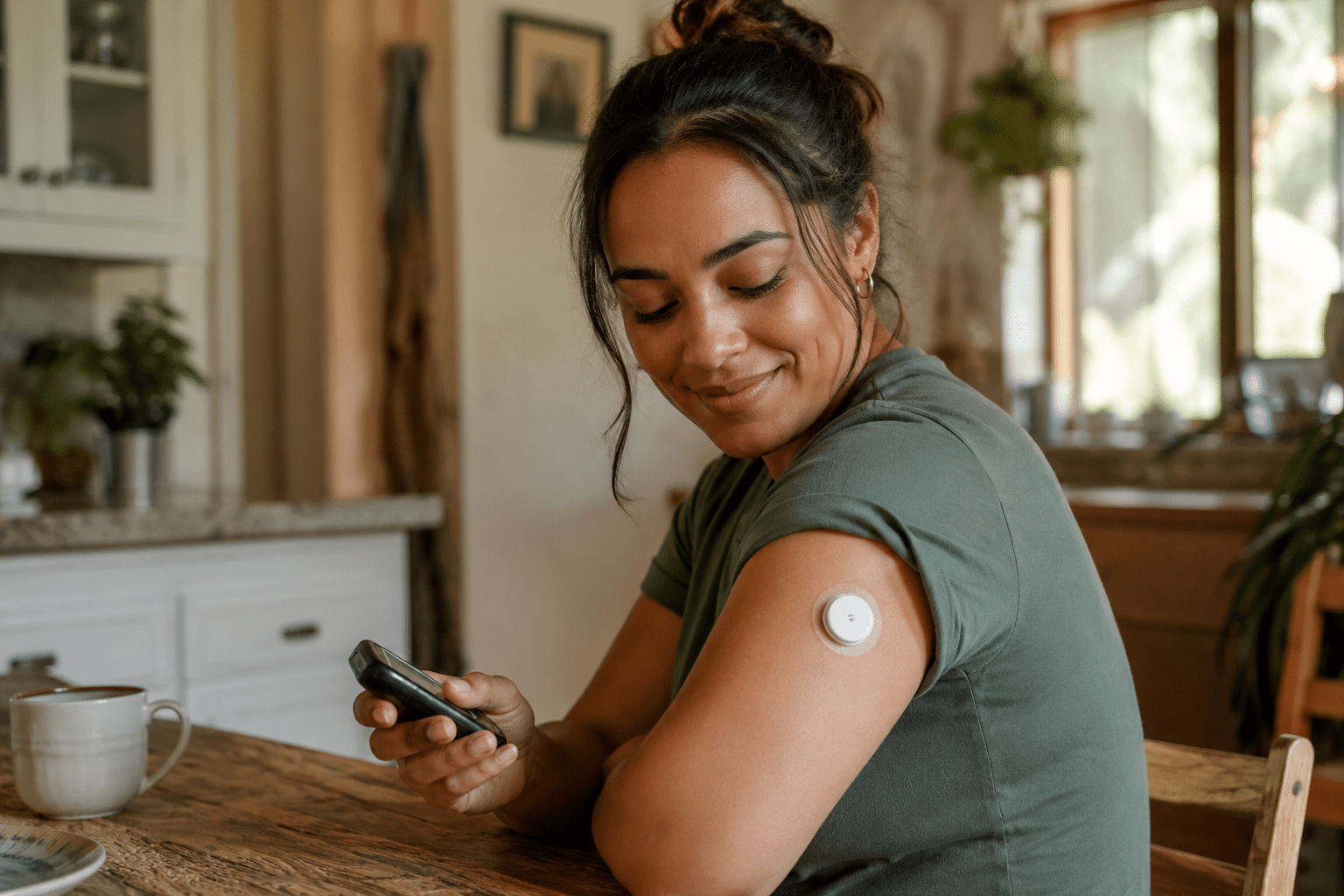
Blood sugar testing is one of the most important daily habits to build when managing diabetes. Whether you use a traditional fingerstick glucose meter or a continuous glucose monitor (CGM), regular monitoring provides real-time feedback that helps you understand how food, activity, stress, and medication affect your numbers — and it gives your care team the data they need to fine-tune your treatment plan.
You cannot reliably gauge your blood sugar by how you feel alone. Both high and low blood sugar can occur without obvious symptoms, especially as you become more accustomed to living with diabetes. Testing removes the guesswork.
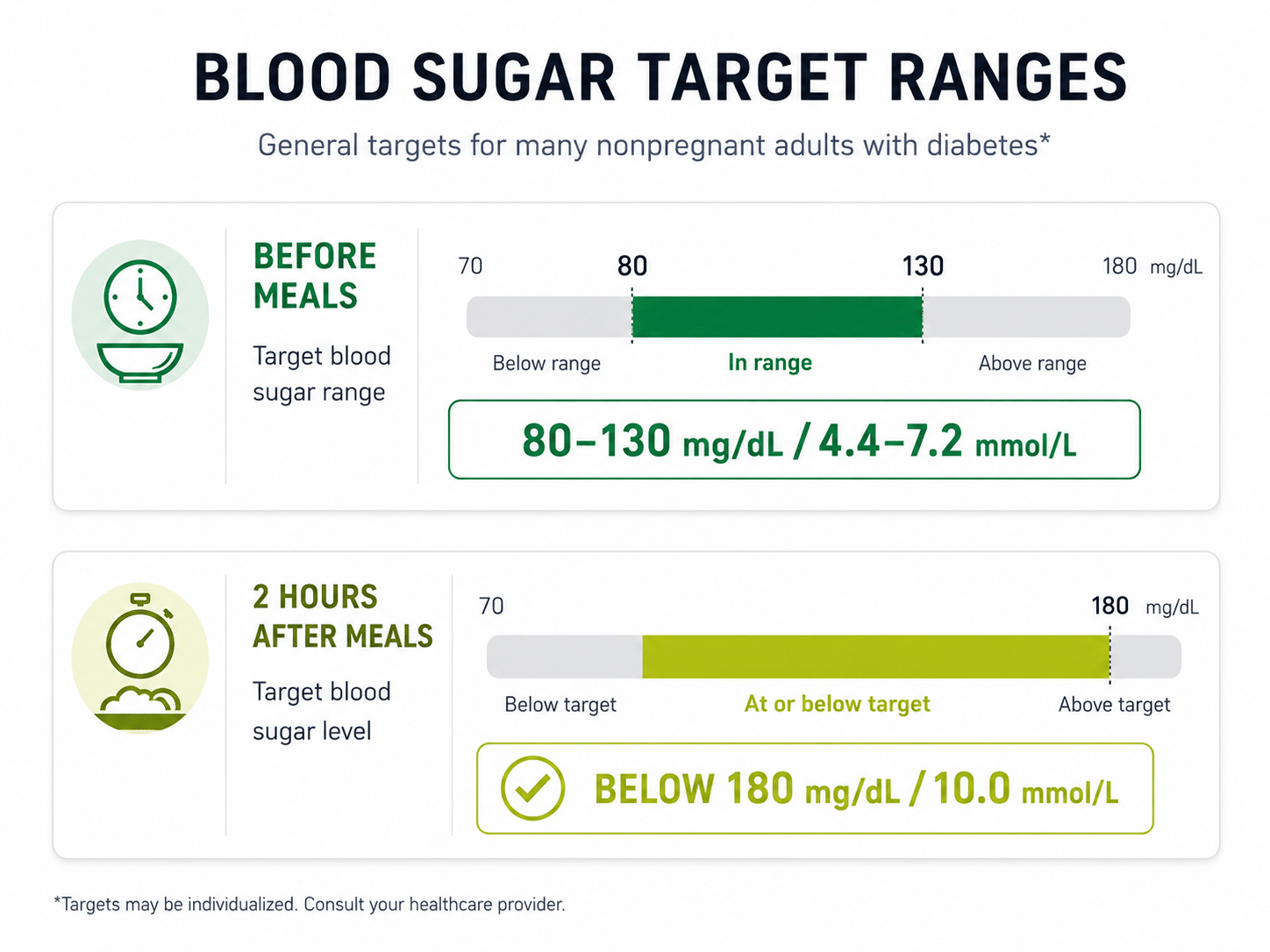
Quick answer: Most adults with diabetes aim for a pre-meal blood sugar of 80–130 mg/dL (4.4–7.2 mmol/L) and a 2-hour post-meal blood sugar below 180 mg/dL (10.0 mmol/L), per ADA 2026 guidelines. How often you test depends on your type of diabetes and treatment plan — people on insulin generally test more frequently. The ADA 2026 Standards recommend considering a CGM at diabetes onset for anyone on insulin, and for many others where monitoring helps management. Read on for how to use each type of monitor, what your readings mean, and how to get the most accurate results.
Jump to: Frequently Asked Questions ↓
What Are the Target Blood Sugar Ranges for Diabetes?
Blood sugar targets are not one-size-fits-all. The ADA 2026 Standards of Care provide general targets for most non-pregnant adults, but your doctor may set different goals based on your age, duration of diabetes, risk of low blood sugar, and other individual factors. Always ask your care team which targets are right for you.
| When You Test | Target Range (mg/dL) | Target Range (mmol/L) | Notes |
|---|---|---|---|
| Before meals (fasting or pre-meal) | 80–130 mg/dL | 4.4–7.2 mmol/L | ADA 2026 general target for most non-pregnant adults |
| 2 hours after the start of a meal | Below 180 mg/dL | Below 10.0 mmol/L | Post-meal peak; timing measured from the start of eating |
| A1c (average over ~3 months) | Below 7% | Below 53 mmol/mol | General target; may be higher or lower based on your individual plan |
Bedtime targets are individualized: Many people, particularly those using insulin, also check blood sugar at bedtime. A common range discussed with patients is approximately 100–140 mg/dL (5.6–7.8 mmol/L), but bedtime goals vary based on insulin regimen, overnight hypoglycemia risk, age, and overall treatment intensity. Ask your care team what bedtime range makes sense for you.
Targets are a guide, not a grade: An occasional reading outside your target range is normal and does not mean you are failing. What matters is the overall pattern over time. Talk to your doctor if you are consistently above or below your targets rather than trying to correct every individual reading.
What Are Your Two Main Blood Sugar Monitoring Options?
There are two primary ways to monitor your blood sugar at home: a traditional blood glucose meter and a continuous glucose monitor. Understanding both options helps you have an informed conversation with your doctor about which is right for you — or whether a combination approach makes sense.
Blood glucose meters (BGM) — fingerstick testing
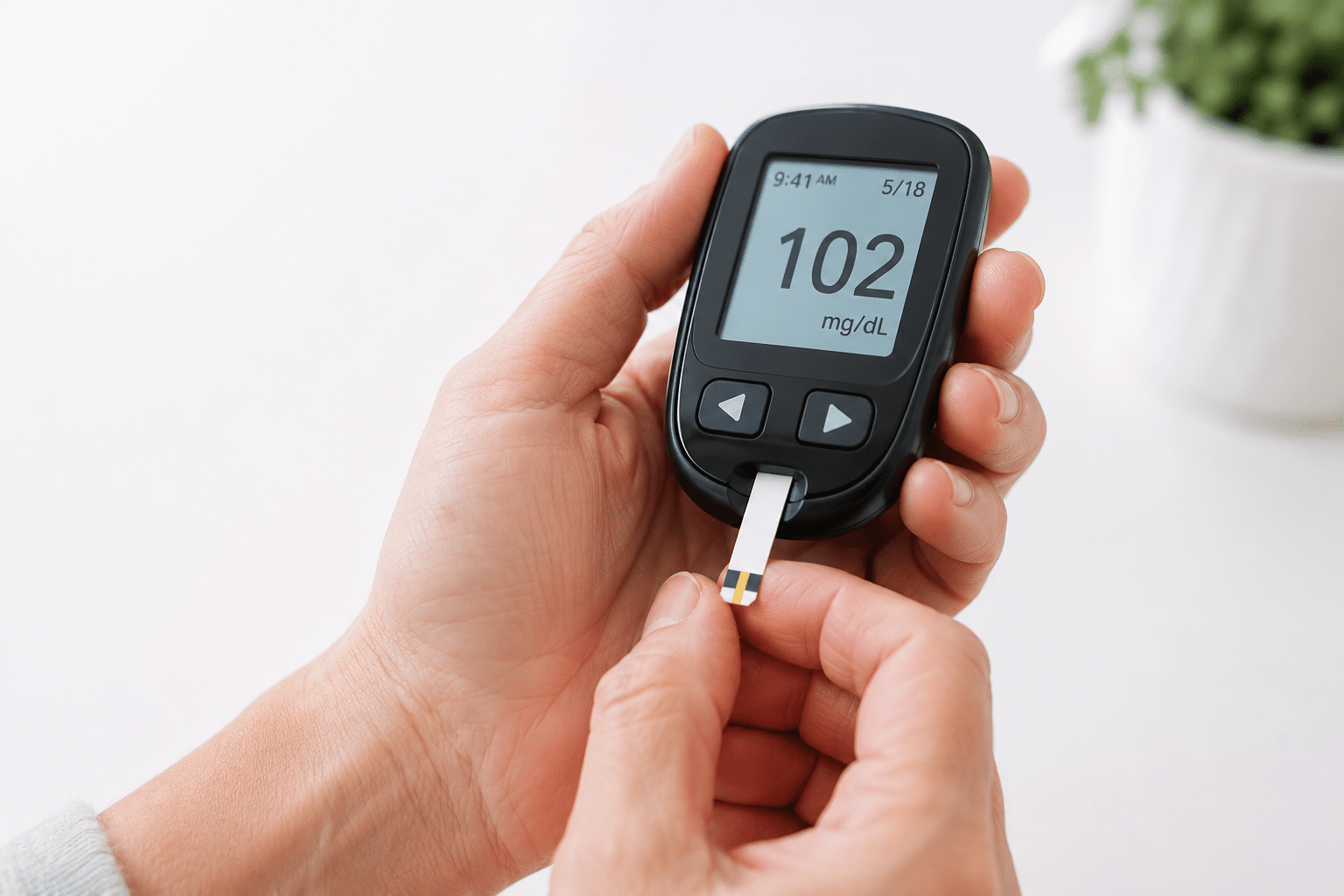
A blood glucose meter provides a single reading at a specific point in time. You prick your fingertip with a lancet, apply a small drop of blood to a test strip, and the meter displays your blood sugar level within seconds. Meters are widely available, inexpensive, and do not require a prescription. When used correctly, they are reliable and accurate, and they serve as an essential backup for CGM users.
Fingerstick testing is most useful for checking specific moments — before a meal, before driving, before and after exercise, or when you feel symptoms of high or low blood sugar. Its limitation is that it only shows a snapshot: it tells you where your blood sugar is right now, but not which direction it is heading or how quickly it is changing.
 Continuous glucose monitors (CGMs) — around-the-clock tracking
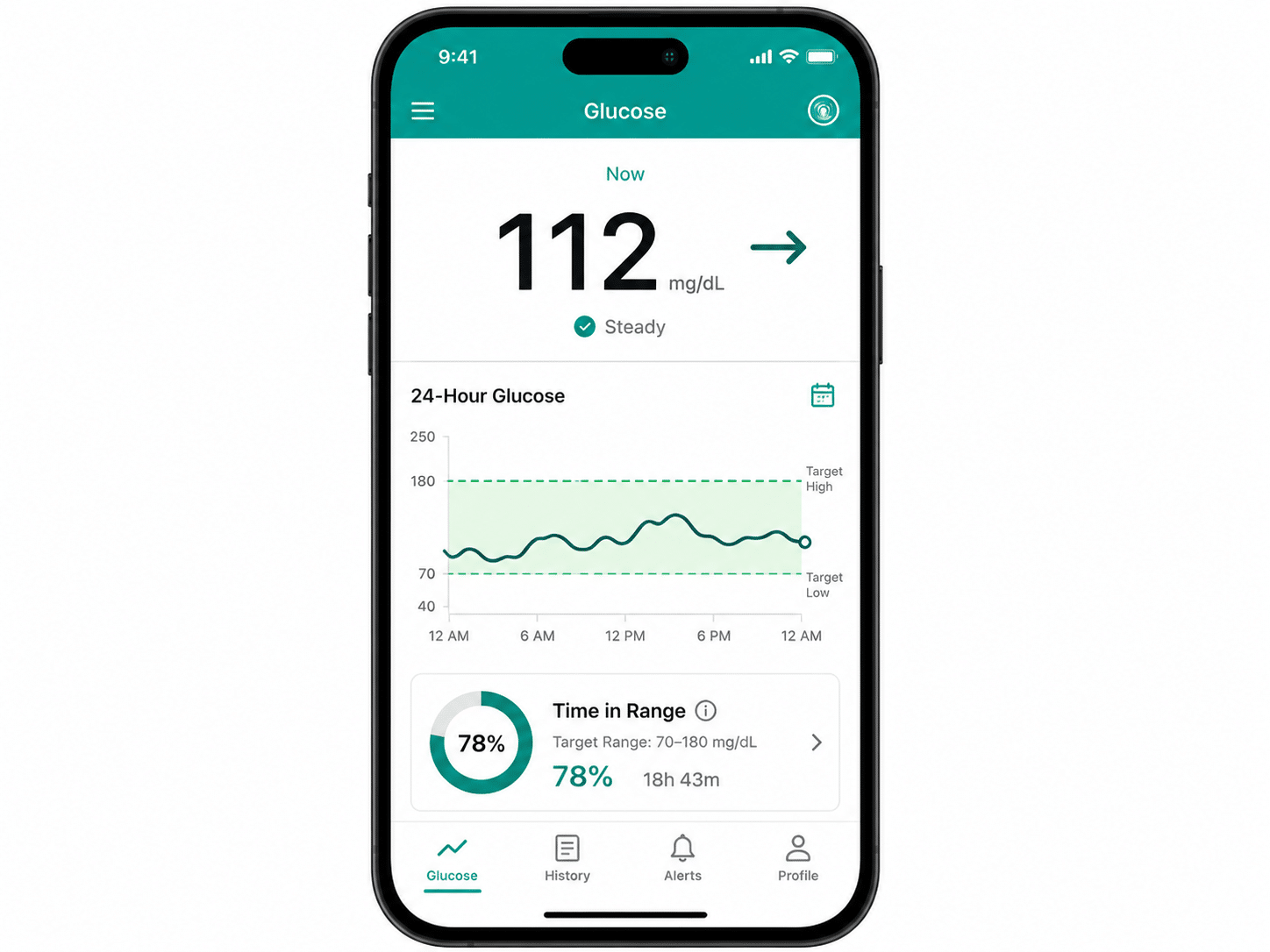
A CGM is a small wearable sensor, typically worn on the back of the upper arm or abdomen, that measures glucose in the fluid just beneath your skin every few minutes — automatically, around the clock. Results are sent to a smartphone app or a dedicated receiver, showing you not only your current number but also a trend arrow indicating whether your blood sugar is rising, falling, or stable, and how quickly it is changing.
The ADA 2026 Standards strongly support earlier use of CGM, recommending it at diabetes onset and at any time thereafter for anyone on insulin, on medications that can cause low blood sugar, or on any treatment plan where monitoring helps with management. Real-time CGM is often the preferred option when continuous alerts and visibility are important, but the right device should be individualized based on your circumstances, preferences, and your care team’s recommendations.
Even with a CGM, you should keep a fingerstick meter on hand. The ADA recommends using a backup meter when your CGM reading does not match your symptoms, during the device’s warm-up period, when supplies run low, or when blood sugar is changing rapidly. See our full guide to continuous glucose monitors for a comparison of current devices.
What Is Time in Range and Why Does It Matter?
If you use a CGM, you will hear the term Time in Range (TIR) — the percentage of time your blood sugar remains within a target range, typically 70–180 mg/dL (3.9–10.0 mmol/L). The ADA 2026 Standards of Care formally established TIR as a primary glycemic goal alongside the A1c test.
For most adults with diabetes, the ADA 2026 target is a TIR above 70% — meaning more than 70% of the time, your blood sugar is between 70 and 180 mg/dL (3.9–10.0 mmol/L). Equally important is minimizing time spent below range. The ADA recommends keeping time with blood sugar below 70 mg/dL (3.9 mmol/L) to 4% and below 54 mg/dL (3.0 mmol/L) to 1%.
TIR provides a more complete picture than A1c alone because it shows the distribution of your blood sugar throughout the day, including whether you have significant spikes after meals or drops overnight. Two people can have the same A1c but very different daily experiences depending on how much time they spend at the extremes.
How Often Should You Test Your Blood Sugar?
Testing frequency depends on your type of diabetes, treatment plan, and circumstances. These are general guidelines — your doctor or diabetes educator will provide a personalized schedule.
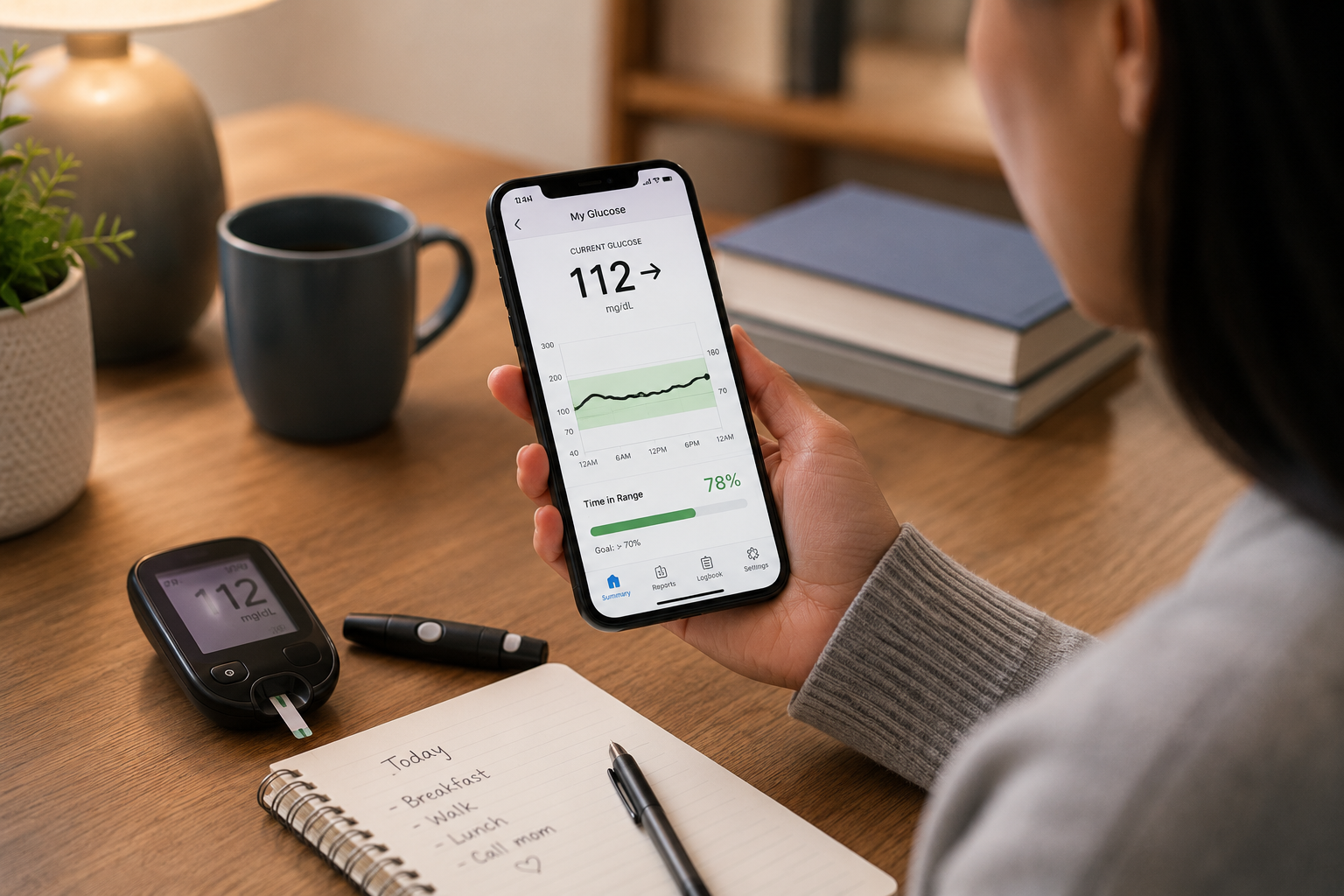
For people with Type 1 diabetes
People with Type 1 diabetes on multiple daily injections typically check their blood sugar four to eight times per day. CGM users benefit from automatic around-the-clock monitoring, but a backup fingerstick meter should always be available. Key times to check include:
- Before each meal and snack
- Two hours after eating
- At bedtime
- Before, during, and after exercise
- During illness, when adjusting medications, or when traveling across time zones
- Whenever symptoms of low or high blood sugar appear
For people with Type 2 diabetes
Testing frequency for Type 2 varies more widely depending on whether you use insulin.
- On insulin: Similar to Type 1 — test before meals, at bedtime, before and after exercise, and when symptoms occur.
- On oral medications that can cause low blood sugar (e.g., sulfonylureas): Test when you feel symptoms and before driving or engaging in strenuous activity.
- On oral medications that do not cause low blood sugar: Some people in this group may still benefit from periodic BGM or CGM — particularly when trying to understand how meals, exercise, or medication changes affect blood sugar. Discuss with your care team whether monitoring is appropriate for your specific situation.
- Diet and exercise only: Your doctor will advise on the appropriate monitoring frequency based on how well your blood sugar is controlled.
When to test more often than usual
Regardless of your usual schedule, test more often — or pay closer attention to CGM alerts — in the following situations:
- During illness, infection, or fever
- When starting a new medication or adjusting your current dose
- During unusual stress, whether physical or emotional
- When changing your eating pattern significantly
- During travel, especially across time zones
- During pregnancy or when planning to become pregnant
How Do You Get Accurate Blood Sugar Readings?
Even minor technique errors can affect meter accuracy. Follow these steps to achieve the most reliable results:
- Wash and dry your hands first. Residue from food, lotion, or hand sanitizer can skew a reading. Warm water and thorough drying also improve blood flow to the fingertip.
- Use the correct technique. Follow your meter’s instructions for blood volume. Using too little blood is the most common cause of error messages or inaccurate results.
- Check strip expiration and storage. Expired strips or strips exposed to heat or moisture produce unreliable results. Store strips at room temperature in their original container.
- Keep your meter clean and charged. Wipe it regularly and check battery levels if readings seem inconsistent.
- Confirm suspicious readings. If a result seems unusually high or low and does not match how you feel, wash your hands and retest. If it is still off, try a different finger or check your strips.
- Record your results. Note the date, time, reading, recent food intake, and relevant context such as exercise or illness. Pattern recognition is much easier with a log.
CGM accuracy tips: CGMs measure glucose in interstitial fluid, which lags slightly behind blood glucose. During rapid changes — right after eating, during intense exercise, or when blood sugar is falling quickly — a CGM reading may differ from a fingerstick value. If your CGM reading does not match your symptoms, use a fingerstick meter to confirm. CGMs also require a warm-up period when a new sensor is placed — typically 30 minutes to 2 hours, depending on the device — during which fingerstick testing should be used instead.
What Do Your Blood Sugar Readings Mean?
A number in isolation tells you less than one in context. Here is a practical guide to interpreting what you see:
Before-meal readings
A fasting or pre-meal reading reflects your baseline glucose regulation. A reading of 80–130 mg/dL (4.4–7.2 mmol/L) falls within the ADA 2026 general target for most adults. Readings consistently above 130 mg/dL (7.2 mmol/L) before meals suggest that overnight or between-meal blood sugar management may need attention. Readings below 80 mg/dL (4.4 mmol/L) are worth noting, especially if you also experience symptoms of low blood sugar.
Post-meal readings
Blood sugar naturally rises after eating, typically peaking 1 to 2 hours after a meal begins and returning toward baseline within 3 to 4 hours. A reading below 180 mg/dL (10.0 mmol/L) two hours after eating is within the ADA 2026 target. Consistently high post-meal readings may indicate that meal content, medication timing, or dosing needs adjustment — a conversation for your care team.
Understanding your A1c alongside daily readings
Your A1c test gives you the big picture — your average blood sugar over roughly the past three months. But A1c and daily readings complement rather than replace each other. A person can have an A1c in the target range while still experiencing frequent highs or lows that significantly affect daily quality of life. Time in Range captures the stability and distribution of blood sugar that A1c alone cannot.
How Should You Track and Use Your Blood Sugar Data?
Testing is only useful if the data is acted upon. Here is how to make the most of your monitoring routine:
- Record everything consistently: For fingerstick users, note the date, time, result, recent food, medications, and any relevant context. Most modern meters connect to apps that automatically log readings.
- Look for patterns, not just individual readings: A single high or low reading is less informative than a consistent pattern. Are your before-breakfast readings consistently high? Do you drop in the afternoon? Patterns like these are actionable.
- Share data with your care team: Many meters and CGM apps generate summary reports. Bring these to appointments or share them in advance so your care team can review trends and provide recommendations.
- Use alerts and alarms: CGMs can alert you when blood sugar is rising or falling toward a dangerous threshold. Configuring alert levels appropriate to your situation is one of the most valuable CGM features.
- Revisit your monitoring plan regularly: The ADA recommends re-evaluating the frequency and timing of blood sugar monitoring at each routine visit, as your needs may change over time.
Helpful Resources and Research
- ADA Standards of Care 2026 — Section 7: Diabetes Technology
- ADA Standards of Care 2026 — Section 6: Glycemic Goals
- DiabetesNet: Continuous Glucose Monitors — Overview & Comparison
- DiabetesNet: Low Blood Sugars — Symptoms, Prevention & Treatment
- DiabetesNet: High Blood Sugars
- NIDDK — Blood Glucose Testing and Monitoring
Frequently Asked Questions
How often should I check my blood sugar?
It depends on your type of diabetes and treatment plan. People with Type 1 diabetes on insulin typically check four to eight times a day — before meals, at bedtime, before and after exercise, and when symptoms occur. CGM users get automatic readings every few minutes, but should keep a fingerstick meter as backup. People with Type 2 diabetes on oral medications may check less often; discuss the right frequency with your care team at each visit, and always increase testing when you are sick, adjusting medications, or changing your routine.
What is a normal blood sugar level for someone with diabetes?
The ADA 2026 general targets for most non-pregnant adults with diabetes are 80–130 mg/dL (4.4–7.2 mmol/L) before meals and below 180 mg/dL (10.0 mmol/L) two hours after eating. For people without diabetes, fasting blood sugar is typically below 100 mg/dL (5.6 mmol/L). Your personal targets may differ based on age, risk of low blood sugar, and other individual factors your care team will consider.
What is the difference between a glucose meter and a CGM?
A blood glucose meter gives you a single fingerstick reading at one moment in time. A continuous glucose monitor (CGM) uses a small wearable sensor to measure glucose automatically every few minutes, showing your current level, the direction your blood sugar is heading, and how quickly it is changing. CGMs provide significantly more information and are recommended at diabetes onset for anyone on insulin per ADA 2026 guidelines, with broader support for others where monitoring helps management.
What should I do if my blood sugar is low?
If your blood sugar drops below 70 mg/dL (3.9 mmol/L), use the 15-15 rule: consume 15 grams of fast-acting carbohydrate (glucose tablets, 4 oz of juice, or regular soda), wait 15 minutes, and retest. If still below 70 mg/dL, repeat. Once blood sugar returns to a safe level, eat a small snack if your next meal is more than an hour away. Always confirm with a fingerstick meter if you are unsure whether your CGM reading is accurate during a suspected low.
What is Time in Range, and does it replace A1c?
Time in Range (TIR) is the percentage of time your blood sugar stays between 70 and 180 mg/dL (3.9–10.0 mmol/L). The ADA 2026 Standards now recognize TIR as a primary glycemic goal alongside A1c — not a replacement for it. The general TIR target for most adults is above 70%. TIR reveals the frequency and severity of highs and lows throughout the day that A1c averages over, giving a more complete picture of blood sugar management when used together.
Should I test my blood sugar before driving?
Yes, especially if you use insulin or medications that can cause low blood sugar. Many clinicians advise treating before driving if your blood sugar is trending low or is below about 90 mg/dL (5.0 mmol/L), particularly for people on insulin or sulfonylureas. If you use a CGM, configure a low-glucose alert to give you advance warning. If symptoms of low blood sugar appear after you are already in the car, pull over safely, test, and treat before continuing.
Does stress or illness affect my blood sugar readings?
Yes, significantly. Illness and emotional stress both trigger hormones such as cortisol and adrenaline that prompt the liver to release stored glucose and can reduce insulin sensitivity. Blood sugar often rises during infections, surgery recovery, or major stress even without changes to food or medication. This is why testing more frequently when you are unwell is one of the most important monitoring habits to build.
How do I know if my CGM reading is accurate?
CGMs measure glucose in interstitial fluid rather than blood directly, introducing a small lag — particularly during rapid blood sugar changes after eating, during exercise, or when blood sugar is falling quickly. If your CGM reading does not match your symptoms, confirm with a fingerstick meter. All CGM users should keep a working fingerstick meter available as a backup, especially during sensor warm-up periods and times of rapidly changing blood sugar.
Can I buy a CGM without a prescription?
Two CGMs are now FDA-cleared for over-the-counter purchase for people with diabetes who do not use insulin: the Dexcom Stelo (adults 18+ not using insulin) and the Abbott Libre Rio (adults 18+ with Type 2 diabetes managed through lifestyle without insulin). Prescription CGMs such as the Dexcom G7 and FreeStyle Libre 3 are covered by most insurance plans and Medicare for eligible patients. Standard fingerstick meters and test strips are available over the counter at most pharmacies without any prescription.
My blood sugar was 180 mg/dL two hours after eating — is that concerning?
A single reading of 180 mg/dL (10.0 mmol/L) two hours after eating is at the upper edge of the ADA 2026 post-meal target but is not in the danger zone. One reading at this level is not cause for alarm. What matters more is the pattern — if you are consistently at or above 180 mg/dL after most meals, that is worth discussing with your care team, as it may suggest that meal composition, medication timing, or dosing could be adjusted.
Last Updated on May 13, 2026