
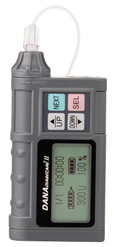
The Dana Diabecare IIS insulin pump is a compact, manual (non-automated) insulin pump from SOOIL that remains a U.S.-available option for people who want reliable basics, long battery life, and straightforward on-pump control. It delivers rapid-acting insulin in tiny background doses (basal) and larger doses for meals and corrections (boluses).
Many newer pumps in the U.S. now include automated insulin delivery (AID), which adjusts insulin using continuous glucose monitor (CGM) data. The Dana IIS does not have native AID or built-in CGM integration—by design—so it tends to appeal to people who prefer simplicity, fewer connected devices, and predictable manual control.
Searching for a specific answer? Jump to our Frequently Asked Questions for quick tips on exercise safety.
| At-a-glance | Dana Diabecare IIS (SOOIL) | Typical U.S. AID Alternatives |
|---|---|---|
| Best for | People who want a small, manual pump with long battery life | People who want CGM-linked automation to reduce highs and lows |
| CGM/AID | No native CGM integration or AID | Often includes AID (e.g., Control-IQ, SmartGuard, Omnipod 5) |
| Insulin capacity | 300 units (3.0 cc) | Commonly 200–300 units (system dependent) |
| Power | Replaceable 3.6V lithium battery (often weeks of use) | Rechargeable (some) or pod-based disposable (Omnipod) |
What is the Dana Diabecare IIS, and why does it matter?
The Dana Diabecare IIS insulin pump delivers rapid-acting insulin under the skin throughout the day (basal insulin) and in larger doses for meals and corrections (boluses). When pump settings match your real needs, many people see fewer “rollercoaster” glucose swings and more flexibility in day-to-day life.
SOOIL is a South Korean pump company with decades of development experience. The IIS was designed to be small, lightweight, and uncomplicated—an option for people who want pump therapy without a heavy focus on smartphone control or automation.
How does the Dana IIS work in everyday life?
Key features you’ll notice
- Compact & discreet: Small, pocketable form factor for flexible wear.
- Flexible insulin delivery: Multiple basal segments, plus standard, extended, and dual/combination boluses.
- Long battery life: A replaceable lithium battery can last for weeks for many users—helpful for travel and emergencies.
- Water resistance: Water-resistant design (always follow the user manual and your clinic’s guidance).
- Simple interface: An icon-based menu that many users find less cluttered.
Plain-language definitions
- Basal rate: A steady “background” insulin trickle to cover liver glucose release between meals and overnight.
- Bolus: A one-time dose for food or to correct a high glucose.
- Extended/Dual bolus: Spreads part (or all) of a meal dose over time—useful for high-fat or slow-digesting meals (like pizza).
What practical steps help you get the most from the IIS?
- Start with safe initial settings: Work with your healthcare provider to set basal rates, carb ratios, and correction factors. Recheck these anytime your routine, weight, stress level, or activity changes.
- Use the bolus calculator consistently: Enter carbs as accurately as you can, account for active insulin (insulin on board), and avoid stacking correction doses too close together.
- Match bolus type to the meal: Use extended/dual boluses for higher-fat or slow meals; use a standard bolus for faster carbs.
- Review weekly patterns: Look for repeat highs or lows at the same time of day. For example, repeated lows below 70 mg/dL (3.9 mmol/L) at 2–4 a.m. often mean basal insulin is too high overnight.
- Carry backups: Keep a pen/syringe, spare infusion set, and spare battery so you can safely switch to injections if needed.
How does the Dana IIS compare to other U.S. pumps?
Many U.S. pumps now include AID—software that adjusts insulin based on CGM trends. The Dana IIS does not offer native CGM integration or AID, which some people prefer for simplicity and cost, while others prefer automation to reduce both highs and lows.
| Feature | Dana IIS | Tandem t:slim X2 | Medtronic 780G | Omnipod 5 |
|---|---|---|---|---|
| Form factor | Very small; tubed | Slim; tubed | Traditional; tubed | Patch; tubeless |
| Insulin capacity | 300 U | 300 U | 300 U | ~200 U per pod |
| CGM integration | No native integration | Dexcom G6/G7 (model-dependent) | Guardian CGM | Dexcom G6/G7 (pod version dependent) |
| Automated insulin delivery | No | Yes (Control-IQ) | Yes (SmartGuard) | Yes |
| Power | Replaceable battery | Rechargeable | Rechargeable | Pod-based (about 3 days) |
| Smartphone control | No | Yes (features vary by phone/app version) | Yes (features vary by app) | Yes (features vary by phone) |
For deeper background on automation, see our beginner’s guide to automated insulin delivery systems and our broader insulin pump comparison guide.
What’s the difference between the Dana IIS and SOOIL’s newer pumps used globally?
Short answer: Outside the U.S., SOOIL’s newer pumps put a bigger emphasis on connectivity and “interoperability”—meaning they can be controlled by approved apps and (in some regions) used as part of an AID system. In the U.S., the IIS remains the main SOOIL option people will encounter.
| Feature | Dana IIS (U.S.) | Newer SOOIL pumps (Global: Dana-i / Dana RS in some markets) |
|---|---|---|
| Control | Manual on-pump control | Bluetooth-connected options with app-based control (market-dependent) |
| Closed-loop/AID option | No native AID | In some countries, it can be part of hybrid closed-loop setups (varies by region and approvals) |
| Best fit | People who want fewer connected devices | People who want phone control and the possibility of algorithm-driven automation (where available) |
| U.S. availability | Yes | Typically not marketed broadly in the U.S. (check current availability and labeling) |
Has SOOIL created its own Automated Insulin Delivery system yet?
SOOIL is best known for making insulin pumps, not for selling a single “SOOIL-branded” AID system in the U.S. The Dana IIS itself is a manual pump without native CGM integration or an FDA-cleared AID algorithm.
Globally, SOOIL pumps (especially newer Bluetooth models in certain markets) may be used as one component of an AID setup when paired with an approved algorithm and a compatible CGM. Availability varies by country, regulatory approvals, and local distributors.
In the U.S., if your priority is AID, it’s usually simpler to start with an FDA-cleared system designed and supported as an integrated AID solution. See our comparison of AID systems.
Is the Dana IIS a good fit for you?
Choose the Dana IIS if you want simplicity
- You prefer manual control: you want a pump that handles the basics well without relying on CGM automation.
- You want a small pump with long battery life: Replaceable batteries can be a big plus for travel, remote areas, and emergency readiness.
- You like predictable, “set-and-review” routines: You’re comfortable reviewing patterns weekly and making structured changes with your care team.
- You want fewer app decisions: Some people feel less “device fatigue” with fewer connected components.
Consider other U.S. pumps if you want automation
- You want AID to reduce daily decision-making: AID can smooth overnight glucose and reduce both lows and high corrections when used well.
- You rely heavily on CGM alerts and trend-based dosing: Integrated systems can reduce the number of manual corrections and help prevent “insulin stacking.”
- You want broad customer support and supply access in the U.S.: Distribution, training, and replacement logistics matter—especially for pump users at higher risk of ketosis and DKA if insulin delivery stops.
If you want help weighing features and tradeoffs, start with Choosing an Insulin Pump.
Can the IIS work with DIY closed-loop systems?
Some experienced users explore DIY (open-source) AID to automate insulin adjustments using CGM data. These systems are not FDA-cleared as commercial products, and setup requires technical skill and careful safety planning.
If you’re curious, start with education (not trial and error): learn the risks, create a backup plan, and discuss the decision with your diabetes clinician. For an overview, see our guide to Do-It-Yourself (DIY) AID systems.
What safety practices should every pump user follow?
- Get training: Work with a certified diabetes educator or pump trainer before starting.
- Confirm unexpected readings: If a reading doesn’t match how you feel, confirm with a fingerstick per your clinician’s guidance.
- Rotate infusion sites: Change sites on schedule to prevent lipohypertrophy (tough, fatty tissue that can block absorption).
- Always carry backups: rapid-acting insulin, pen/syringe, ketone strips, a spare infusion set, and spare batteries and supplies.
- Have a failure plan: Know when to check ketones, when to give correction by injection, and when to seek urgent care.
Summary: What’s the bottom line on the Dana Diabecare IIS?
The Dana Diabecare IIS insulin pump is a compact, reliable choice for people who prefer manual control, minimal complexity, and long battery life. If you want built-in CGM integration and automated insulin delivery, U.S. options such as Tandem t:slim X2, Medtronic 780G, or Omnipod 5 may be a better fit.
Outside the U.S., SOOIL’s newer pumps (such as the Dana-i and Dana RS in some regions) emphasize smartphone connectivity and may be used as part of AID setups, subject to local approvals. In the U.S., the IIS remains the practical SOOIL option for comparison with more automated systems.
You’ve got this. With thoughtful setup, regular reviews, and support from your care team, a pump can become a powerful tool in your diabetes toolkit.
Helpful Resources & Research
- Pumping Insulin, 7th Edition Get the best guide to insulin pumps and AIDs:
- AID and Pump Settings Tools Improve your pump and AID Settings
- SOOIL USA (U.S. product and contact information)
- SOOIL official: Dana Diabecare IIS (specs and features)
- FDA: Insulin pump safety information
- ADA 2026 Standards of Care (Diabetes Technology)
- American Diabetes Association: Insulin Pumps
Frequently Asked Questions
Is the Dana Diabecare IIS insulin pump available in the U.S.?
Yes, Dana Diabecare IIS is a SOOIL pump that has been available through U.S. channels, but availability, training support, and supply logistics can vary. If you’re considering it, confirm insurance coverage, local training support, and how quickly you can get replacement supplies.
Does the Dana IIS work with a CGM like Dexcom or Libre?
Not natively. The Dana IIS is a manual pump without built-in CGM integration. You can still use a CGM separately to guide your dosing decisions, but the pump won’t automatically adjust insulin based on CGM readings.
Does SOOIL have an automated insulin delivery (AID) system?
In the U.S., SOOIL is not known for an FDA-cleared, SOOIL-branded AID system. In some countries, newer SOOIL pumps can be used within AID setups depending on local approvals and compatible algorithms/CGMs.
Who is the Dana IIS best for?
It’s often a better fit for people who want a small, straightforward pump, prefer manual control, and like the idea of a replaceable battery that can last weeks (helpful for travel and emergency preparedness).
When would a U.S. AID pump be a better choice than the Dana IIS?
If you want the pump to automatically adjust insulin to help prevent lows and reduce highs—especially overnight—an FDA-cleared AID system (like Omnipod 5, t:slim X2 with Control-IQ, or Medtronic 780G) is usually the easier, more supported option.
Can the Dana IIS use extended or dual boluses for pizza and high-fat meals?
Yes. Extended or dual/combination boluses are one of the practical “quality of life” features on many pumps, including the Dana IIS. They can help when a meal digests slowly and glucose rises later.
What are the most important safety steps for any pump user?
Always have a backup insulin plan (pen/syringe), carry extra infusion supplies, rotate sites, and know when to check ketones—especially if you feel sick or glucose stays high despite corrections.
Is DIY (open-source) looping an option with SOOIL pumps?
Some people explore DIY AID, but it’s not the same as using an FDA-cleared commercial AID system. It requires technical skill, close monitoring, and a solid backup plan. If you’re interested, start with education and clinician discussion—not experimentation.
How do I compare the Dana IIS to U.S. pumps quickly?
Focus on (1) whether you want AID, (2) tubed vs tubeless, (3) battery style (replaceable vs rechargeable vs pod), (4) CGM compatibility, and (5) supply/support access where you live.
What should I ask my clinician before choosing the Dana IIS?
Ask about safe starter settings, how you’ll adjust basal/carb ratios/corrections, what to do for unexplained highs, your ketone plan, and how quickly you can switch to backup injections if insulin delivery is interrupted.
Last Updated on October 7, 2026